
Answer Engine Optimization (AEO) is the response to this: it involves a set of practices that transform content from a mere link into a source from which an AI system can extract and cite information.
Google’s AI Overviews now appear in almost every search, and the sources cited within them increasingly differ from the pages holding the number-one ranking. Previously, ranking in the top 10 offered a strong chance of securing a spot in the ‘Answer Box,’ but that is no longer guaranteed.
This guide discusses the meaning of AEO, how answer engines decide what to cite, and the structural, technical, and authority signals that influence these selections.
What Is AEO And How It Differs From SEO and GEO?
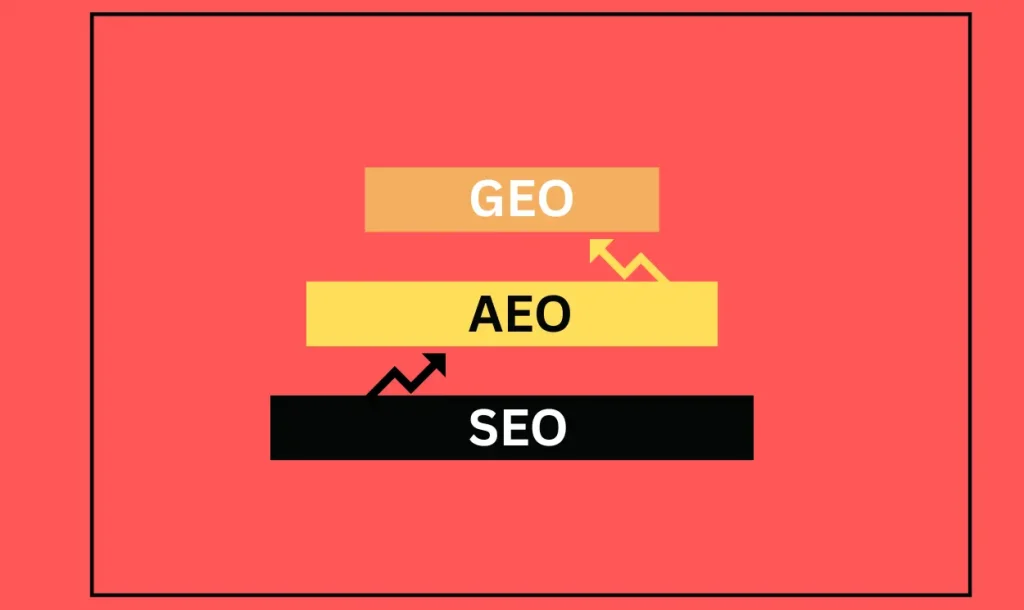
AEO is a method of structuring content so that AI-powered platforms — such as Google AI Overviews, ChatGPT, Perplexity, Gemini, Copilot — can seamlessly ingest it and use it as a source when generating answers. Search Engine Optimisation remains crucial here: it indexes your page and provides the AI system with material to retrieve in the first place. AEO adds a layer on top of this, focusing on extractability and citation. Generative Engine Optimisation (GEO) is a broader umbrella term covering AEO-plus strategies that aim to influence how a model constructs an answer—including its phrasing and framing—after selecting its sources.
| Discipline | Focus | Success metric |
| SEO | Ranking in the results list | Position, organic traffic |
| AEO | Being extracted as a direct answer | Featured snippets, AI citations |
| GEO | Being trusted and selected during synthesis | Share of voice in AI-generated answers |
These aren’t competing approaches — a page with weak technical SEO won’t get indexed, so it can’t be retrieved, so it never gets a chance at citation. Each layer depends on the one below it.
How Answer Engines Actually Decide What to Cite
Most answer-providing engines utilize Retrieval-Augmented Generation (RAG) technology. This process involves three steps.
First, the system identifies the meaning or intent of the user’s search and the content or entity it refers to, rather than just matching keywords.
Second, it finds web pages that are conceptually related to that goal—even if those pages don’t contain the exact words or phrases the user searched for.
Third, before collecting information to generate a final answer, the system evaluates and ranks pages based on relevance, reliability, structure, and novelty.
Our analysis found that LLM models tend to divide a single question into multiple subtopics or topics.
When a complex query is asked, the system often breaks it down into smaller sub-queries and searches for each separately before combining the results. For example, a search for “best CRM for small sales teams” can be broken down into specific aspects like price, integration capabilities, setup time, and user reviews—and the model completes all of these searches before even writing a word of the final answer.
And in the second phase of RAG, it collects data from all those sites where the author has answered directly and based on the main topic.
Consequently, the definition of an “optimized” page is shifting. A page that answers not only the main question, but also related questions that may arise in the reader’s mind, is structurally more advantageous than a page built around a specific keyword.
Structure Content So It Can Be Extracted
When an answer-providing engine selects your page as a potential answer, the information it gathers depends largely on the page’s formatting. Large-scale citation research reveals certain consistent patterns:
- Start with the answer. Mention the question in the title and answer it in simple language within the first 40 to 60 words. Most AI overviews are designed to be this length, so it’s more important to have a self-contained introduction that doesn’t slowly build to the main point.
- Keep paragraphs short. Two to four sentences are easier for models to understand and display than dense blocks of text.
- Choose a format that suits the purpose. Present steps and processes in numbered lists. Place comparisons in properly coded tables rather than in stylized table images. Use bulleted lists for categories. Citation research shows that, especially for ‘how to’ and ‘best’ questions, ranked, numbered lists are preferable to simple bullets.
- Keep each section self-contained. AI systems often select specific sections rather than the entire article, so the meaning should be clear if a reader reads that section directly without any other context.
Schema Markup Worth Prioritizing
Structured data doesn’t guarantee a citation, but it removes ambiguity for a system trying to determine who wrote something, what it covers, and how the pieces connect. Five schema types carry the most weight for AEO:
- Organization — establishes your brand as a recognized entity.
- Article or BlogPosting — attaches authorship and publish and update dates.
- FAQPage — marks up genuine question-and-answer content.
- Person — connects an author to verifiable credentials and profiles.
- BreadcrumbList — clarifies where a page sits in your site’s topic hierarchy.
FAQPage schema is a good example of how AEO diverges from classic SEO. Google limited the visual FAQ accordion in search results to a small set of authoritative sites back in 2023, so the direct SEO payoff shrank for most sites. The underlying markup still functions as a strong signal for AI extraction, though — pages using genuine FAQPage markup tend to convert to citations at meaningfully higher rates than pages without it. Use JSON-LD, place it in the page head, and fill in fields like dateModified and sameAs rather than stopping at the minimum needed to pass a validator.
Author Authority and E-E-A-T
Answer engines rely on the same signals that Google’s quality raters look for: Experience, Expertise, Authoritativeness, and Trustworthiness. In fact, when a model must choose between two similar sources, authors with genuine bios, visible credentials, and a verifiable professional presence carry more weight than an anonymous byline.
The data on this is quite clear. Research analyzing large samples of AI overview citations found that the vast majority of citations went to sources demonstrating strong authorship and trust signals; sites lacking these were largely filtered out before even being considered for citation.
Separate research on Generative Engine Optimization found that incorporating expert quotes, specific statistics, and named sources increases the likelihood of a page being referenced. Specifically, this involves a byline with a genuine job title, a bio page linked to LinkedIn or published work, and claims supported by named sources rather than left vague.
Build Topical Authority With Content Clusters
None of this matters if an AI crawler can’t reach the page in the first place. Most major providers now operate separate bots for training and search retrieval. OpenAI’s GPTBot trains the model, while OAI-SearchBot powers ChatGPT’s live search. Anthropic similarly splits ClaudeBot and Claude-SearchBot. This separation allows a site to block the training crawler without blocking the search crawler, thereby avoiding model training while still being eligible for citation in real-time answers.
A reasonable initial configuration allows specific search and retrieval bots—such as OAI-SearchBot, Claude-SearchBot, PerplexityBot—and allows training bots to be launched at will, without leaving the default configuration completely open or accidentally blocking everything. An llms.txt file can also be added to direct AI systems toward a site’s most useful pages. This should not be considered essential, as there is no conclusive evidence yet that it directly affects rankings.
Signals Beyond Your Own Site
AI models don’t evaluate a page in isolation; they weigh how a brand is discussed elsewhere. Mentions on Reddit, Quora, G2, Capterra, and Trustpilot function as independent corroboration that’s difficult to manufacture, and sites with a real presence on those platforms tend to get cited more often than sites relying purely on their own domain.
Build this into a content plan on purpose: original research other writers might reference, genuine participation in relevant Reddit or Quora threads, and real customer reviews on the platforms your buyers already check.
How the Major Platforms Differ
| Platform | Tends to favor |
| Google AI Overviews | Pages already ranking reasonably well, paired with clear structure |
| Perplexity | Freshness and clearly attributed sources |
| Microsoft Copilot | LinkedIn presence, especially for B2B topics |
| Claude | Long-form, comprehensive coverage |
| Gemini | Multimodal content — text paired with images and video |
None of these preferences are fixed rules, and they shift as platforms update their systems, but they’re a reasonable starting point for prioritizing effort with limited resources.
Measuring Whether It’s Working
Traditional rank tracking doesn’t capture AEO performance well, since a page can be cited inside an AI answer without anyone clicking through to the site. Useful metrics include citation frequency across platforms, share of voice against named competitors, and Search Console impressions paired with unusually low click-through — often a sign that content is answering the query directly on the results page instead of driving a visit.
Free tools like HubSpot’s AI Search Grader offer a baseline check. Paid platforms like Otterly.AI and Peec AI start in the $25 to $95 monthly range for smaller teams, while Semrush’s AI Toolkit and Profound serve larger organizations tracking citations across many keywords and competitors. No tool can promise a citation, and any vendor claiming otherwise is worth treating with real skepticism.
Keep Content Fresh, and Avoid These Mistakes
Update cadence carries more weight in AI citation than most content calendars account for. Content refreshed within the past year accounts for the large majority of citations on commercial and evaluation-stage queries, and content updated within the last six months performs best of all.
A short list of what quietly damages AEO performance: burying the answer several paragraphs into a piece, adding FAQ schema to content that isn’t a genuine Q&A, letting dateModified go stale while the visible content keeps changing, relying on one long article instead of connected coverage, and skipping author attribution on anything offering advice.
Frequently Asked Questions
No. AEO builds on technical and content SEO rather than substituting for it. A page still needs to be crawlable, indexed, and reasonably well-ranked before it has a real shot at being cited by an AI system.
Citation patterns shift often, sometimes daily on a given query, so early movement can show up within weeks of restructuring a page. Building genuine topical authority through a content cluster is slower, typically measured in months rather than weeks.
That depends on priorities. Blocking training crawlers like GPTBot stops content from being used to train future models. Blocking search crawlers like OAI-SearchBot or PerplexityBot removes a site from citation eligibility entirely. Most brands trying to build visibility allow the search crawlers and make a separate decision on training.
Not directly, according to Google. What it does is reduce ambiguity for search engines and AI systems trying to identify what a page covers and who’s accountable for it, which correlates with higher citation rates even without functioning as a direct ranking signal.
Read more about:
Best AI Tools for Data Analysis and Visualization 2026
Content reseach sources: